A viral claim spreads fast
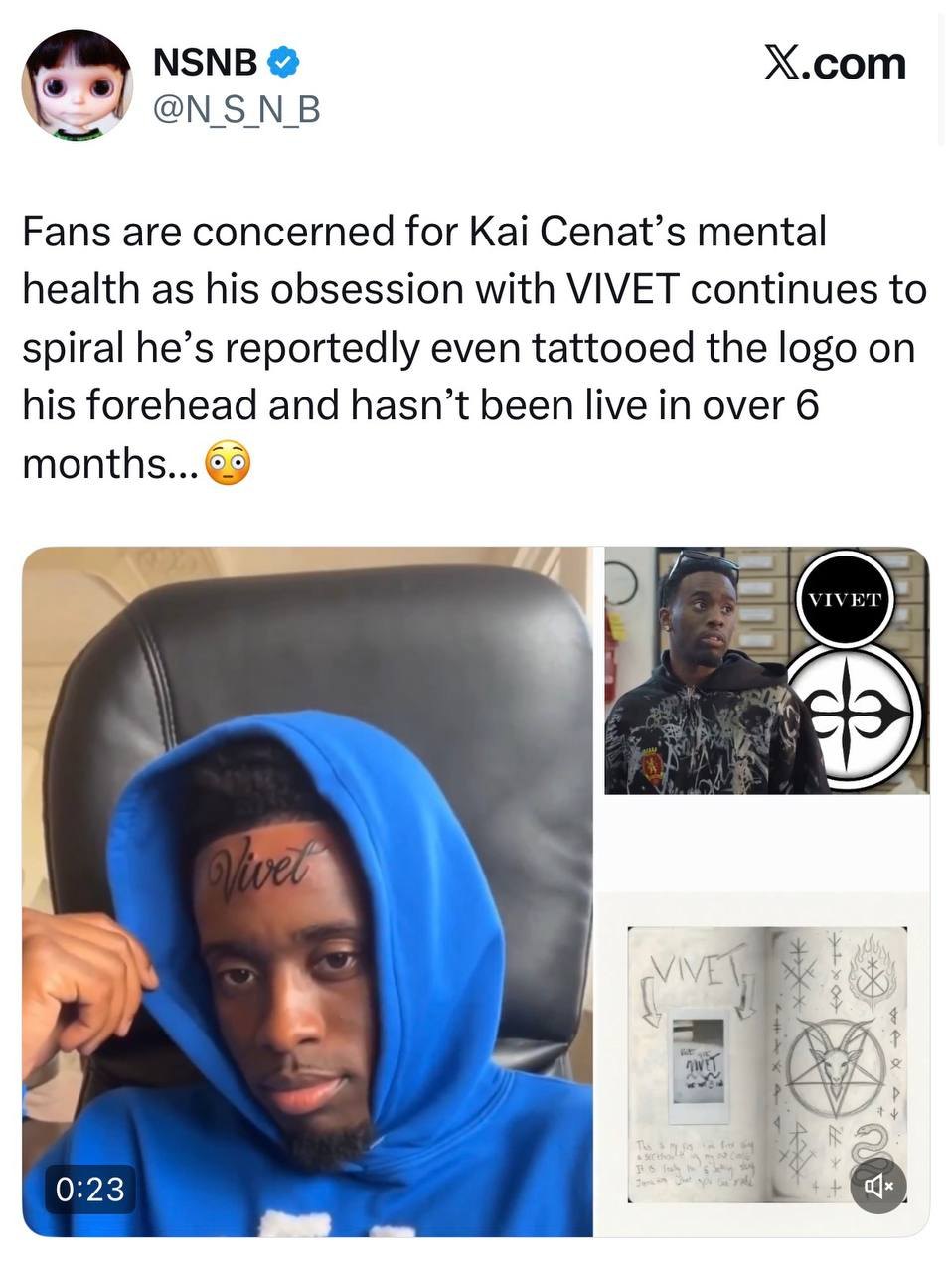
In recent days, social media posts have circulated claiming that Kai Cenat disappeared for over six months after getting a “VIVET” tattoo on his forehead. Some versions go even further, suggesting he “gave his voice” to a secret group and is no longer in control of his own content.
But there’s no verified evidence
There is currently no reliable, confirmed information from official sources, verified accounts, or credible media outlets supporting these claims. No public record shows Cenat disappearing for that length of time, nor any confirmed appearance of such a tattoo.
How these rumors take off
Stories like this often follow a pattern:
- A dramatic claim appears on platforms like X (Twitter)
- Anonymous “insiders” are cited without proof
- Lack of official response fuels speculation
- The story evolves into something darker and more extreme
In this case, the narrative mixes influencer culture with conspiracy-style storytelling, making it more engaging—and more misleading.
Content activity ≠ proof of control loss
Some posts point out that accounts continue posting content “without his voice.” However, this is common in large creator operations. Many influencers have teams managing uploads, edits, and scheduling. It doesn’t indicate anything unusual on its own.
Why it feels convincing
The story plays on familiar themes:
- Loss of identity
- Secret organizations
- Sudden behavioral changes
These elements are powerful because they trigger emotional reactions, even when there’s no factual basis.
Bottom line
There is no credible evidence that Kai Cenat disappeared, lost control of himself, or is connected to any group called “VIVET.” This appears to be a viral rumor amplified by speculation and anonymous claims rather than verified facts.
Stay critical of dramatic online stories—especially when they rely on mystery instead of evidence.
via x.com